Caesaria by Hanna Nordenhök, translated by Saskia Vogel
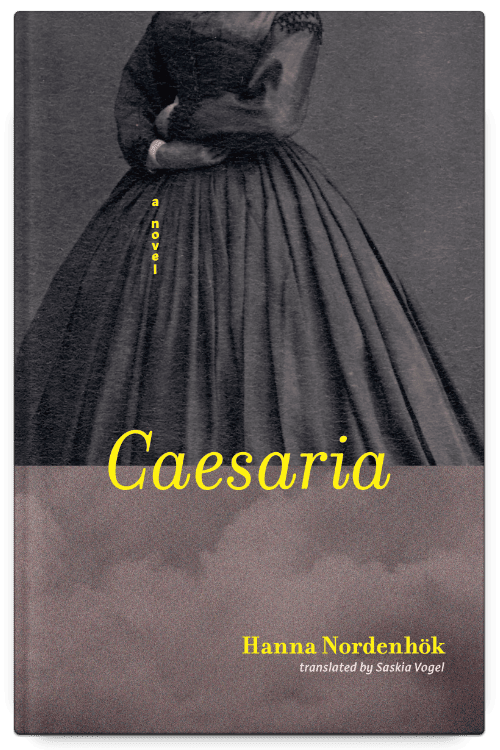
Caesaria by Hanna Nordenhök, translated by Saskia Vogel
Pre-Order
Literature in Translation Series
Literary Fiction / Gothic Fiction
Publication Date: October 15, 2024
5.25 x 8 inches
240 pages
Trade Paperback
ISBN 9781771669122
|
Trade Paperback $24.95 (Pre-order) |
On a remote country estate in the 19th century, a renowned obstetrician keeps a young girl that he once carved out of her mother’s body. It is the dawn of modern gynaecology, when the female body appears as a cryptic landscape and male hubris reigns.
The girl lives a dollhouse existence, characterized by supervision and punishment, assault and incarceration. Here, dirt and runaway visions dominate, while vast skies and sticky nature rub against her confinement.
Caesaria is part gothic novel, part fairy tale told in lush, elegant, and dreamlike prose. These pages radiate a low-level dread, probing gender warfare and class oppression. What is reality to those who have grown up trapped in their own bodies, relying upon their own senses, without any contact with the world outside? Nordenhök shares an astonishing answer, almost mythological in scope, through the story of one eponymous girl.
Praise for Caesaria
“A glimpse into the life of a woman who’s been reduced to a curiosity. A quietly raw, poetic study of imprisonment, both imposed and internalized, and the shifting boundaries between care and neglect, human kindness and human cruelty.” —Marta Balcewicz, author of Big Shadow
“A novel as beautiful as it is unsettling. Hanna Nordenhök’s prose combines with singular mastery the density of poetry with the feverish atmosphere of a gothic tale.” —Fernanda Melchor, author of Paradais and Hurricane Season
“Nordenhök’s locked up mansion is a disciplinary system of supervision and punishment, a claustrophobic spectacle where death and disaster are indisputable components in the condition of being a girl. Caesaria is wonderful!” —Johanne Lykke Holm, author of Strega
Press Coverage
“A breathlessly creepy and deeply affecting portrait of a girl’s life so confined and so deprived of impressions that it’s verging on madness.”—Göteborgs-Posten
“A dark, violent and at times breathtakingly beautiful tale, at the same time as it works as a brutal account on gender and power.” —Opulens
About the Author
HANNA NORDENHÖK has been awarded several major literary honours for her work. Her novel Caesaria (2020) won Swedish Radio’s Literary Prize and was shortlisted for Vi’s Literature Prize. Nordenhök also works as a translator from Spanish and has been praised for her translations of Fernanda Melchor, Andrea Abreu and Gloria Gervitz. She lives in Stockholm.
SASKIA VOGEL is the author of the novel Permission and a translator of more than 20 Swedish-language books. Her writing has been awarded the Berlin Senate Endowment for Non-German Literature. Her translations have won the CLMP Firecracker Award for Fiction (Johannes Anyuru’s They Will Drown in Their Mothers’ Tears), have been shortlisted for the PEN Translation Prize (Jessica Schiefauer’s Girls Lost), and supported by grants from the Swedish Arts Council, the Swedish Authors’ Fund, and English PEN. She was Princeton’s Translator in Residence in fall 2022 and lives in Berlin.